Tag: Documentary

Gameshow Dynamos

It is still quite hard to find new documentaries coming out that are easy to watch and not about another damn singer. I might have to refuse to watch any of them this year as a sort of protest.

Instead I found Gameshow Dynamos, a relatively recent release (within the last year at least) documentary about game show experts. I have only seen one “documentary” on game shows before, and it was Big Bucks: The Press Your Luck Scandal, which turned out to be quite creepy. There are probably great stories relating to the behind the scenes of the best game shows, and just someone needs to film it and make a sweet picture.

Gameshow Dynamos gave me a chance to see something different, and it was free on Amazon Prime, so even better.

Gameshow Dynamos is on the surface about two stories. One is the very specific story of Bernard and Claire Boiko. Two very different people who found each other, love, and grew a wonderful family together despite opposition. The other is a sort of history of the rise of Game Shows in America from the 1950’s to the 1990’s. And of course its pitfalls.

And obviously how the two stories connect and game shows saved the Boiko household from ruin.

LOGO
I know I know, I used a promo poster picture. I suck.

Bernard’s first game show was Tic Tac Dough where he won an equivalent of $9000 in today’s money. He did it to pay back college debt and bills, but it didn’t last long. Then Claire went on the show, while pregnant for her third child and she also did fantastic, to help pay for medical bills.

And for awhile, they did a few game shows just to get by. Bernard didn’t make a lot as a teacher (until the teacher union succeeded in a pay raise), and they ended up with five kids. But there was a scandal back then where the producers would give popular people answers to do well for ratings. Bernard had to testify before a grand jury about it (he never was offered answers for cash) and it put a halt on the game show industry for awhile.

But eventually they got in it. And eventually their kids grew up. They did most of their game show playing once they were now grand parents, going on dozens of shows each separately, on the game show circuit because people liked them so damn much. And hey, game shows pay great.

This isn’t a sad story about game shows and debt and get rich quick ideas, but a happy one! And these people probably do hold the record for appearances on game shows a couple (and somehow never together on any two person game shows)! Also they talk about finding out the right hook for yourself to make you likable by producers to get on these game shows.

The documentary is a nice story, but at the same time, it does feel a bit too short. Its running time is just an hour, and a lot of it is basically the story of their life before they met, their marriage, and their problems. I would have liked a lot more footage of them actually on game shows, answering questions. We got bits and pieces, but not a lot of significant time. I want to see game show footage when I am watching something about game shows. More shots of them winning, losing, whatever. Heck, we got one of them on jeopardy but I don’t think we saw any actual questions from it, or watching them sweep a category or anything.

It was a good idea, but could have been better.

2 out of 4.

City Of Gold

Believe it or not, reviewing a subject is actually pretty hard. What do you say? Do you know how to say it with more words than just “good” and “bad?” Are you able to convey your feelings in a factual way that makes people believe? Shit, just check out my guest reviews on the website. People thought reviewing films would be easy, but it takes awhile to really find your voice and your groove.

I can’t even imagine reviewing anything besides film. Television shows are similar, but no way could I review an episode or whole season. Goodreads only prepares me so much for book reviews. And food? Forget about it! I am the worst eater, so I could never even be a bit biased when it comes to food.

So you know what? Those people who review food, not the assholes on Yelp, they are the real MVPs.

I don’t know anything about these people, outside of the fact that they probably will eat anything. I never heard about Jonathan Gold, a famous food critic from Los Angeles. And by famous critic, I mean Roger Ebert levels of food criticism.

Here I am then. About to review a documentary about a guy who reviews food. Thankfully I have some experience reviewing a reviewer. Life Itself was pretty good!

Mmmmm
Oh yeah, this dude loves food. All the food.

City of Gold is titled as such, due to Jonathan’s last name, and his relationship with the city of LA. Gold is apparently the first guy to really put himself out there and go to every little restaurant. Before then, the critics would only go to the fancy big French restaurants in the city, for the elite, and that was it. But not Gold. He went to every Mom and Pop shop, in every district, tasting cuisine from around the world.

To make a comparison, it would be like a movie reviwer only watching the top of the box office. Gold would watch the box office leaders, the weird indie stuff, and every straight-to-DVD B-Movie. (Hey, I used to do that when I had time!). Gold changed things for the food critics. He also isn’t extremely mean. A lot of critics bitch and moan over the smallest problems due to their “refined pallets” and ego. He doesn’t go around loving everything. But he gives it a chance. He learns about the story behind the dish, the culture that produced it, and how it might fare to similar dishes of that variety.

And of course, this leads to amazing business for these lucky shops to have been written about by Gold, the most trusted name in food since, well, anyone but Nestle.

What I liked most about this (arguably simple) documentary, is that samples of his writings were read out loud as a sort of narration, and I just found myself insanely jealous. He has such a way with words, every review becoming a beautiful story. I want him to write my biography some day. Or at least just narrate my life as a I sit around and do nothing on a computer.

Gold is an awesome person. And although the documentary is about him and what he has done to the industry, by the end it broadens out a bit to be about the city he is from as a whole. At the same time, it is still a very niche documentary. It won’t go leading any social change or change your thoughts on anything at all. But it is a nice use of your time, if you like learning about strangers.

3 out of 4.

Meet The Patels

I first heard about Meet The Patels months ago, and that is because an alumnus from my High School was the director! Now, she went there 14 years before me or so, but it was still cool. We got quite a few newsletters letting us know it was going to theaters and eventually Netflix.

Despite the connection though, I won’t be biased favorable for it. If anything, I might be biased against it. Because despite our school connection and being a member of the press, they wouldn’t give me a press screening to watch the film. What a bunch of jerks.

Patel is apparently a very popular Indian last name. Our story is about Ravi Patel, who is about to turn 30 and is currently unmarried. Unmarried and Indian! At that age! Oh no! His parents were part of an arranged marriage of course, after his dad had already moved to India. His wife was the 12th match and they knew it would work. And the mom is also quite good at arranging marriages, so it looks bad that her son hasn’t even had a girlfriend in 30 years!

But…but Ravi has had a girlfriend. He was dating a white ginger chick for two whole years without his family knowing about it. But he had an “Indian” problem and some commitment issues, so they ended it right before the documentary. The “Indian” problem is that he has always pictured himself marrying an Indian woman and knows it is what his family wants.

So he goes to his parents and agrees for them to work on arranging a marriage for him.

Family
A photo of them taking a photo! Madness.

Now, arranged marriages aren’t like they used to be. The parents had to print out a bio sheet on their son and send it all around the country to friends and family, all of which passed it on. At the same time, the parents began to receive information on ladies across America. They sort through the ladies and give him women they think he will enjoy. He just has to go on a date with the woman and they decide on their own if they want to date any more in the future. If not, the parents keep trying and keep hooking them up with company.

And Ravi’s sister, Geeta, is there the whole time to document and film the whole thing. Weddings, Indian dating sites, and speed dating at Patel reunions. No it’s no weird. Basically everyone is a Patel, and most Patel’s just marry other Patel’s from different parts of India.

As a documentary, this story is about Ravi, but he isn’t really an interesting character. What makes the documentary interesting is learning about modern Indian American dating customs. The levels the parents go through to provide for their children. That is what an average viewer will appreciate about this documentary.

Ravi’s story on its own is…well, predictable. If you know how stories work, you can probably figure out how this thing will end already. I hope it was actually a real story and not a scheme done by the brother/sister to make it seem like a better story. But who can really say?

Meet The Patels is the type of documentary you might want to put on while working on other projects, not bothering to pause it if you need to run to the water closet. An average story about average people, with some nice culture aspects occasionally thrown in.

2 out of 4.

The Overnighters

The oil industry is a fickle little bitch. I know quite a few people who are currently jobless as a result of a price crash and international disputes. But this documentary, The Overnighters, isn’t about the oil crash despite how easily it could have been. It was about the oil boon.

The only reason people would volunteer to move to North Dakota is for work. There are thousands of thousands of oil workers doing manual labor, working 12 hour shifts, non stop, oil rigging, hard work fun. And they make money. They get OT every week and have no free time, but they get paid and if they can keep it up, they can get rich quick.

Some people go out there because no jobs at home, some because they want to get away, some to support family back home, and some because they have no other alternatives. They might have had felonies or other law trouble and getting a regular job just isn’t going to work. So they hear about all the jobs up in North Dakota and just drive up there and think they will get lucky.

But a lot of people cannot find work right away. Not only that, but in all of these small towns, there are not many places to stay. Sure there are some apartments, but thanks to the boom and supply/demand, the rent is extremely high. Places like Williston, ND aren’t going to build a lot of apartment complexes, because they know it will eventually come crashing back down, then they will have virtual ghost towns.

So we have people living in cars, living in RVs, and an increasingly annoyed small town that is afraid of them for being strangers. For being people with potentially violent pasts.

But one man, Pastor Jay Reinke, opened up his church to some of these people to sleep on their floors. And the parking lot to others. Just so they could stay overnight somewhere warm as it is the Christian thing to do.

Pew
See, now you understand the title!

Pastor Reinke seems to be a genuinely good guy. He wants to help others when everyone else turns their back. He helps them find jobs, let them know about other places that can help out, and gives them advice on whether they should even try to stay and tough it out.

During the documentary, there is also a local ordinance wanting to ban people from living in RVs. If they find someone is staying in it for more than 28 days in a year, they can be fined or arrested. This will seriously ruin a lot of lives of people who are just trying to survive and get by, not hurting anyone. So Reinke even goes door to door with flyers, inviting the towns people to meet these men and get over their fears. To see that people can be helpful and more Christ-like. Hell, Reinke even opens up his home occasionally to a few people.

But Reinke has his own demons from his past that also affect his family (wife and two daughters), more so than anyone would realize. Just typing that sentence made this sound like a thriller, so forget that.

The Overnighters is a powerful documentary. You get to hear stories of many individuals, including Reinke himself. He seems to be a guy who wants to help, but still he ends up making enemies. It is a reminder that life can fucking suck, and makes one wonder how much worse it is up there given the oil crash.

And it affected me emotionally as well. It was easy to imagine myself in the position of some of those individuals, willing to do anything just to support the family. It is a harrowing documentary that might make you feel like shit.

So why not a 4? Well, I have some issues with the way they presented some information at the end. And also the questions that they didn’t answer in the documentary by the end. They seemed to focus more on the pastor and less on the men who were homeless and potentially about to be spotless as well, when it comes to a place to sleep. But it still didn’t take away from the power that most of the documentary had on someone watching for the first time. Those stories are the real power here. Sure, the pastor has his own unique journey, but I just care less about that.

3 out of 4.

The Search For General Tso

Who is General Tso? Was he a real man? Did he like food or chicken? Did he make Chinese food? Did he make Chinese American food? Why do people even like this stuff?

Well, if you have wondered any of this, you have come to the right documentary. The Search For General Tso answers all of these questions and more! Hell, it does it in under 80 minutes as well. That means you can watch even more documentaries in a single day!

First of all, we have to accept that you can go to any Chinese restaurant around the country and basically get the same exact menu. The same chicken dishes, beef dishes, fish, pork, appetizers. Hell, might even get crinkle fries. You will get some soy sauce packets, the orange sauce packets (whatever the fuck that is), some fortune cookies, and probably get your food in a typical container.

Look at the picture below. If you go to the store, you will probably see a visual menu with that bad boy on it, General Tso’s chicken, and it will look a lot like that.

Why is that?! Again, it will explain how that ended up working out.

First of all, I should mention that General Tso was a real person and a pretty bad ass warrior. He made the rank of General!

Gent
And this is food for any military commander.

So the actual search for General Tso ended up being pretty easy. Since he has museum’s named after him, and whole buildings in parts of China.

That means the next hour of the documentary has to talk about something. So it talks about everything. Chinese immigration to the US, lack of jobs for immigrants / policies to prevent the Chinese from doing a lot, turning traditional Chinese food into Americanized versions, the rise of Chop Suey, why everything looks the same, and the eventual decline of the food.

And what’s that? Oh yeah, when General Tso’s chicken came into being. Where it came from, who invented it, and why it became super popular after the fact.

The Search for General Tso is a weird documentary and clearly it goes over a lot of information. It is incredibly informative, but not necessarily on information you ever thought you would care about. I feel like I learned a lot in the time frame, but I also felt like I could have learned more.

This film felt like the post it notes on the subject. The quick and dirty to tell the story, but without getting into the nitty gritty details. They spent maybe 3 minutes talking about Jewish families and Chinese Food, but there is a lot of history there. There could have been more on other dishes that started and why they became familiar. They didn’t even start to touch on the Chinese Buffet phenomenon, which probably had an interesting story as well.

A good start, but damn it, I want more.

2 out of 4.

He Named Me Malala

You may have heard of Malala Yousafzai. If you have not, then you live in a bubble somewhere. Or you live in a repressed country and they are actively making sure you don’t hear about her.

She made a book that was titled I Am Malala, memoirs of her life up to that point. Very political. You see, she is a girl growing up in Pakistan. Her name is important, because her father, Ziauddin Yousafzai, named her after a Pakistani folk hero. He imagined she would be great! He also ran a string of private schools and taught her to read and write and love education. In that time, women’s education became a hard thing to achieve, because of the Taliban occupation of Pakistan. In fact, they destroyed many all women schools and banned women from schools for a time. This is the crux of the issue. Women’s rights, and a child’s right to an education.

Starting around 11, she became to get involved in politics. She started as an anonymous blogger for the BBC, telling stories of Taliban occupation and how it affected her life. It eventually grew and eventually her identity was discovered. As it grew, she spoke more and more about the right of education and women around the world. Not just the middle east, but in other parts of Asia and Africa and South America, women often do not get any education training at all. This keeps them in the dark and does a disservice for their entire gender in terms of finding equality and being treated with respect!

So, in 2012, when Malala was just 15 years old, the Taliban ordered an assassination attempt on her, as she was doing harm to their public image. Which is a sad and funny sentence to write. Obviously she had received quite a few death threats up to that point, but no real bullets. Thankfully she survived, but the bullet did go into her head, neck and shoulder requiring immediate doctor attention. The left side of her face is slightly paralyzed and more, but damn it, she survived the Taliban officially.

Malalalalalala
Don’t stop, Can’t Stop, Won’t Stop.

That was a lot of introduction! But He Named Me Malala, the name of the documentary, takes place after all of this. It shows her living now in a normal house, still in school, with her two younger brothers, father, and maybe mother. I have no idea if her mother is still alive, because she wasn’t mentioned or talked about in the documentary at all. It could be a privacy thing, or a fear thing because she is a woman. I don’t know. Half of this documentary tells her story, of some of the activism she has done, about her life before and after the assassination attempt, and a few of her speeches.

Malala is a great girl who is very passionate and was lucky to have an education from her father at home. It allows her to speak well on all of these subjects and it is great that she is using it to help insure education for every child in the world. And she won a Nobel Peace Prize at 17! Definitely a worthy child to know about and support.

But this documentary doesn’t seem to do a great job at it. It feels very subdued. Or basic. Like it was done as a small piece for a news station about a person and her life. It didn’t have a journalist narrating over the film, with her and her dad doing a majority of the talking, but it didn’t seem to give her the right respect. They didn’t go into huge amounts of detail about the atrocities of the Taliban or the assassination attempt. It was more about what she was doing now and how it can be hard to balance this while also studying for exams. It just turns her into a regular girl who sometimes gives speeches and talks to politicians around the world. It is good to humanize her, but at the same time, by doing so it just seems to lessen her achievements.

Overall, this documentary was probably made too early. Hell, they barely talked about the fact that she won the Nobel Peace Prize, as it was only featured in a small segment in the credits. Like they did the whole documentary already and then it happened so they had to find a place to put it. She will do great things in her life and already has, so it is just too early. We don’t need her in a documentary every few years.

The same situation happened with the concert documentary Justin Bieber: Never Say Never. It came out when he was just 18, as if he had already peaked and was on a decline. So now we also already have Justin Bieber: Always Believing and Justin Bieber’s Believer because they did it too early. Hell there are probably more out there and there will be more again. We don’t need Malala to be given the Bieber treatment. Please no more documentaries for at least ten years, when you can make it serious and important and not feel like a “fluff” piece.

2 out of 4.

The Look of Silence

With The Look of Silence, I will have completed all of the nominated documentaries for the 2016 Academy Awards!

This was the hardest one to find to watch and prepare for. Thankfully, Amazon Prime eventually had it available to rent.

If you didn’t see a month ago, I reviewed The Act of Killing, nominated a few years ago for best documentary (and losing to a music based Twenty Feet From Stardom). The Look of Silence is basically a sequel to that documentary. Yes, apparently documentaries can have sequels.

If you saw The Act of Killing, you will have learned that 50 years ago, there was a genocide in Indonesia. The people rebelled and the military took over, and all of the communists were killed. Communists are of course a loose term, and many thousands of people were slaughtered or raped. The people who did the killing became rich and are still the people leading the country politically today. And those people, for the most part, are PROUD of their acts.

It was really fucked up overall, and totally should have won that year.

So the director is back, with the sequel, to continue the story, but in a new way. (Which is good, no one likes the same fucking movie).

TLOS
Look how fucking bored that guy is, watching the same movie twice.

Last time we talked with the killers, and for the most part, they showed no remorse. This time, our main character is Adi Rukun (seen above). He wasn’t born when the killing was taken place, but his brother Ramli was alive. He was also killed in a brutal fashion, despite just being a child and clearly not a communist. Because they felt like it. Adi is now an adult and has known about his brother’s death before, but thanks to Joshua Oppenheimer (the director), he has detailed information on exactly how and why his brother died. How so? From the killers, who explained the whole thing, and it was even written down in a book.

Now, Adi and his family are obviously not okay with any of this, but there is basically nothing they can do. Adi is an optometrist, and I guess they use that as a way for him to confront both the killers of his family, and people who killed in general. Offering them free glasses to help the vision and stuff.

So this time, outside of more backstory and information, a lot of it is just Adi talking to these people, asking hard questions and confronting them on their past. It is brutal. It is intense. And people don’t take these accusations kindly, and especially get pissed off at their past being brought up. They’d rather just forget the whole thing.

This documentary was fantastic. These are real people, a real genocide, and talking very uncomfortably about it all. This is the stuff that creates great drama, and it is on a subject people in the West know very little about.

Fuck, it was hard to make my eyes look away.

And I am annoyed, because most likely Amy will win Best Documentary. But I have put this film and Winter on Fire above it, because they were fan-fucking-tastic and important. I liked Amy, sure, but these documentaries feel so much more important. And I will be extremely disappointed if Oppenheimer loses a second time to a music bio documentary.

4 out of 4.

Winter On Fire: Ukraine’s Fight For Freedom

Oooh, something about Ukraine. In Ukrainian!

I didn’t know what to expect about Winter On Fire: Ukraine’s Fight For Freedom. If I had to guess, maybe about how Russia was fucking it over? Technically, that happens all the time, so it wasn’t so specific. But I meant when Russia came and took Crimea from Ukraine, like, last year or whenever.

But no! It takes before that!

You see, Ukraine has a lot of problems since its independence in 1991. But damn it, they were a free country. They just had some kinks to work out. Their eventual goal would be to join the EU, which is why in 2013 they voted in a President Viktor Yanukovych. He ran on a campaign to get them into the EU.

Unfortunately, the President in November of 2013 refused to sign the agreements that he promised. Partially due to Russia, who was laying down some harsh trade restrictions against Ukraine, because Russia is a dick. Either way, public opinion on him quickly turned. That night, hundreds of college aged Ukrainians in Kiev went to the Maidan Nezalezhnosti central square. They peacefully protested and demanded that the government sign the agreements and start them on their journey to join the EU.

And then the police got involved. Most notably the Berkut, which is like the police special forces there who work for the government. They attacked the peaceful protesters because the President told them to, which really caused everything to escalate.

OnFire
I assume you remember the documentary had fire in the title?

From there, the protest moved to a cathedral where they could block the gates from the police and seek sanctuary. Word got out of the protests and more came. Food was donated, clothes, medical supplies. Doctors donated their time to help those hurt. And then they went back to the square.

Needless to say, the police kept trying to fuck things up. The same night UK/US delegates came to Ukraine to try and find a peaceful resolution, the Berkut launched a late night sneak attack to wipe everyone out of the area, which now had barricades and a lot of set up.

And of course, eventually the protesters fought back. They marched peacefully to the Parliament, and of course were fucked over, which started an almost war between the two sides. The protesters weren’t just college students by now. They were kids. They were old people. They were average blue collar workers. There were just a shit ton of police/Berkut and hired Thugs to try and fight the spirit out of the protesters.

Needless to say, I won’t describe it any more, but the protest lasted almost 100 days, with a lot of violence, death, and hopelessness. This documentary has footage throughout their protest, taken and compiled to show the story of how some youths decided to hold a revolution. After all, these kids were born in a free Ukraine, and they refused to let their freedom go.

The documentary is not for the faint of heart. There is a shit ton of footage of police brutality, people getting critically injured, and I am guessing I saw people get killed as well. It was so powerful and hard to look away. Which is good, since it was subtitled, and looking away would be detrimental to your viewing experience.

After this, I only have one more documentary that was nominated for Best Doc, but as of now, this is my favorite documentary of 2015 and I sure hope it wins.

4 out of 4.

What Happened, Miss Simone?

Seriously though. What Happened, Miss Simone?

You used to be there, now you aren’t! That is why Maya Angelou asked this question in a poem.

Honestly though, before this documentary, I don’t think I ever heard of Nina Simone. The only reason I decided to watch this one was because it was one of the few documentaries nominated that I had not already seen. And a Netflix original at that. I honestly swore I was done with these sorts of documentaries for 2015.

You know the type. Musical biographical documentaries. 2015 was full of them, and I think there was a three or four week span on this website where the documentary in question was about a famous celebrity or musician. I am sick of them.

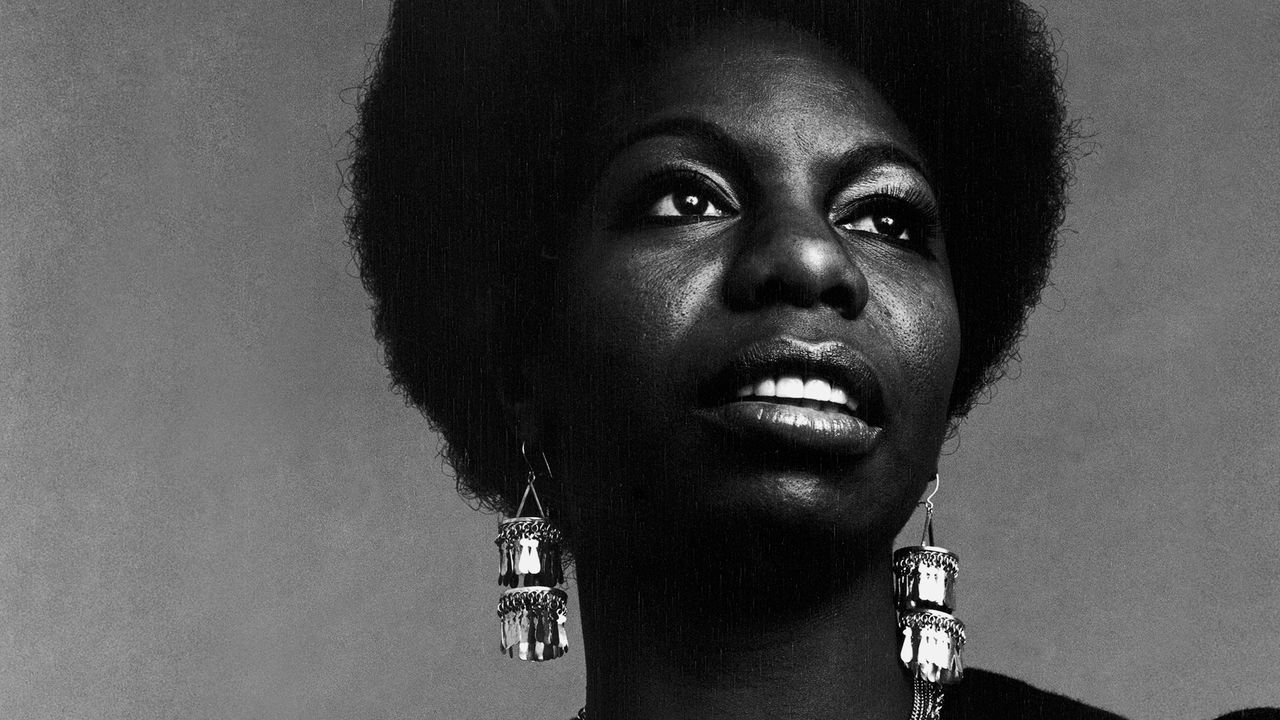
Nina Simone was black and a classically trained pianist. She was trained by two rich white women who took a fancy on her, despite the quite segregated times. She also began to sing over music eventually, despite that not being true to her training. And hey, then she played jazz. She had a soulful voice and America fell in love with her. She was in fact the first black pianist to play at Carnegie Hall, one of her life long dreams.

And then things started to change.

Simone
Her hair grew as expansive as her talent!

What Happened, Miss Simone? is of course a documentary about her life. It lets us know about the birth of her daughter, spousal abuse, over working, switching from Jazz to political/protest music, her super involvement in the Civil Rights, her leaving of America, more abuse, and the end of her life with music and touring. A pretty broad spectrum. If it was a real movie about her life, then it would probably only be about 1 random year of her life during the civil rights instead of all this other stuff!

There were some good moments sure. When the abuse and political songs started. We had interviews from her daughter and could hear stories of Simone hanging out with Malcolm X, Martin Luther King Jr., and more. It was also interwoven through live performances of some of her songs, back in the day. We are talking old school video recordings. They were neat.

If I had any real issues with the documentary, it just took me a long time to get into it. The early parts of her life and first 20-30 minutes seemed to drag for me. The other strange point is that the documentary did a good job of highlighting all the struggles in her life. All the bad things that happened to her and her depression. But, given the title and how they worded it, including letting her abuser talk in the documentary, it seemed to just make her a giant victim in the whole documentary.

I think it should have done a better job of celebrating her life and showing how strong she was to get through things. Instead it focused on her weak times not her strong times. Maybe that makes a more intriguing story, but to me it doesn’t do a lot of justice to someone who was actually really important for the civil rights.

I guess I am surprised this documentary was chosen as a nominee over a few many others I have seen this year. Oh well, on to the next one!

2 out of 4.

Trophy Kids

Now that I have a new baby, my wife and I are trying to figure out what her future will be. You know, will she be good at sports or school? Will she be a gymnast or a singer? Will she like bugs or kitties? You know, the normal things. Because if a parent can do anything, it is force their own ideas and beliefs onto their baby and shape them how they want, right? I think that is right.

So I definitely wanted to see the documentary Trophy Kids. I figured it would teach me how to make my child into a future super star. That way she can earn millions of dollars doing sports stuff (Even though no women outside of like 5 make millions I think) and I can retire early because of it. That sure would be swell.

But of course that is not what this documentary is about. Hell, it isn’t about athletes who were Trophy Kids or Trophy Kids currently in training. Nope, it is about the parents. It is about the lengths they will go to for their child to succeed. And by lengths, I mean how dickish, angry, and abusive will these adults be to their kids in order for them to be scared into doing things correctly.

After all, yelling at your kid five feet away from them, in the stands, and on the side line will totally improve their performance. It is easy to listen to your parents shrieking voices with all the other sports distractions around you.

In Trophy Kids, we examine several different sports and aged kids, and how all their parents are more or less the same.

TK
There is no crying in baseball, but there is crying in golf.

The one parent who is slightly different from the rest was a very religious mom with twin boys, who was training them to be future Doubles Tennis champions. She talked a lot about Jesus and their path, and they were all freakishly nice. That one wasn’t too bad I guess.

Everyone else? A guy who divorced his wife and forced their kid to move with him in high school to focus on his football training. After all, his wife is making him too feminine. Pictured above is a dad with a golf prodigy daughter who could put and hit at 3 years old. She doesn’t like him as her caddy.

And the other main story is dealing with two dads who have sons in high school basketball. Since their youth, they have had personal trainers, height training, and of course actual basketball training. Basically a full time job. And their dads get to go and yell a lot during high school match ups and get coaches fired. Thanks dads!

The documentary starts off a bit slow but ramps up after a halfway mark. Hell, if they could have just spread out a lot more of the intensity, this might have ended up as a 4 for me. There is one extremely powerful scene with the football dad in a car ride. It starts off simple and then suddenly everything is switched to 11, and suddenly, child abuse. It was surprisingly how long that scene in particular was and how messed up in the head the dad actually ended up being.

But really, shit, I just feel bad for the kids. They all want to do good and live up to their parents expectations, but of course the expectations always get raised and they are never satisfied. It is sad for them and when we get to see where a few of them place after the fact, it is just sad. Damn documentaries, making me feel emotions.

3 out of 4.